WebAgent Start-up, Sign-in and Connecting to UCC
Introduction
This view shows the connections and steps made during start-up, sign-in, and first connections made to the A Unified Contact Center, or UCC, is a queue of interactions (voice, email, IM, etc.) that are handled by Agents. Each UCC has its own settings, IVR menus and Agents. Agents can belong to one or several UCCs and can have multiple skills (competencies). A UCC can be visualized as a contact center “micro service”. Customers can utilize one UCC (e.g. a global helpdesk), a few UCC’s (e.g. for each department or regional office) or hundreds of UCC’s (e.g. for each bed at a hospital). They are interconnected and can all be managed from one central location. Service.
Authentication through the Web Application of the Agent (a Teams user), its contacts and calendar(s) and the subsequent retrieval of UCC capabilities like Timeline and plugins using various possible methods, is shown in a selection of views below.
Note
Some steps in the views shown can be a simplified representation of reality but should provide you with a clearer understanding of these steps and building blocks involved. The direction of an arrow typically represent the initial direction a connection is made, after which signals or traffic can flow both ways. (For a step marked as "0" it is assumed the connection has already been configured or established in an earlier process)
View 1: WebAgent with basic capabilities
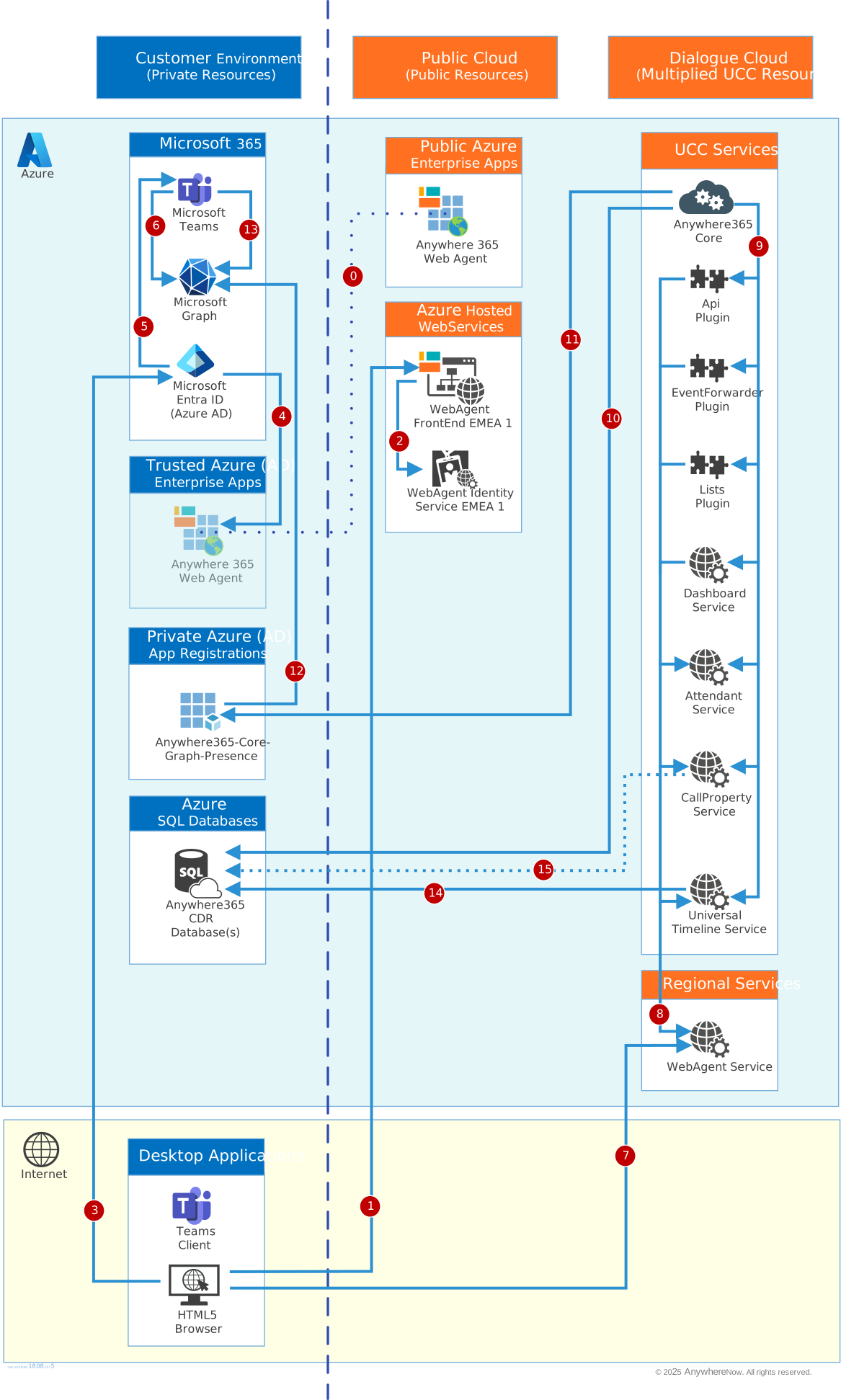
Glossary of steps.
- The WebAgent Enterprise Application should have already been trusted by your Formerly known as Azure Active Directory (or Azure AD, or AAD) administrator, to allow read access to specific user attributes in your Microsoft Formerly known as Azure Active Directory (or Azure AD, or AAD).
- The Agent (or Supervisor) connects in a browser to the WebAgent Url which verifies a user state.
- The WebAgent Front-end application calls on a Microsoft Identity Service (OIDC) for identity verification.
- The Microsoft identity service calls on Microsoft Entra Id.
- Microsoft Entra Id verifies the trusted application and user credentials.
- Microsoft Entra Id and WebAgent connect to Teams for license and Teams Capability
- Microsoft Teams publishes Teams license and capabilities in Microsoft Graph for later API connections.
- After user authentication and Teams capabilities exchange, the WebAgent front-end redirects the authenticated user to the WebAgent Service (WAS).
- WebAgent Service has a 'live" connection to UCC Core services
- UCC Core feeds its services with "live" information to be processed by WebAgent.
- WebAgent is reliant on UCC Core's "live" connection to active resources in customer tenant (like Call Detail Records (CDR) are the meta data of a converstation: who talked to whom, at which time, for how long and with which identity among other things (skill, optional classification, etc) which gets stored in your SQL (analytical) database. and possibly Agent setting databases)
- WebAgent is reliant on UCC Core's "live" connection to active resources in customer tenant (like Microsoft Graph for Teams Presence)
- UCC Core leverages the Agents "live" Presence feed through tenant's Private App registration allowing connection to Microsoft Graph for all tenant's users Teams Presence State.
- All tenant's Teams user presence registrations (presentities) is sent through Microsoft Graph API to allowed and trusted Apps with specific permissions. These are leveraged by UCC Core to define hunting strategies and to display other contact presentities in WebAgent contact lists or searches during transfers or display in Timelines.
- Timeline historic interactions are queried in realtime based on customer's CLID.
- (Optionally) Call classification score can be appended post-call to a CDR database (from a WebAgent dropdown list)
View 2: WebAgent with CRM CTI Plugin
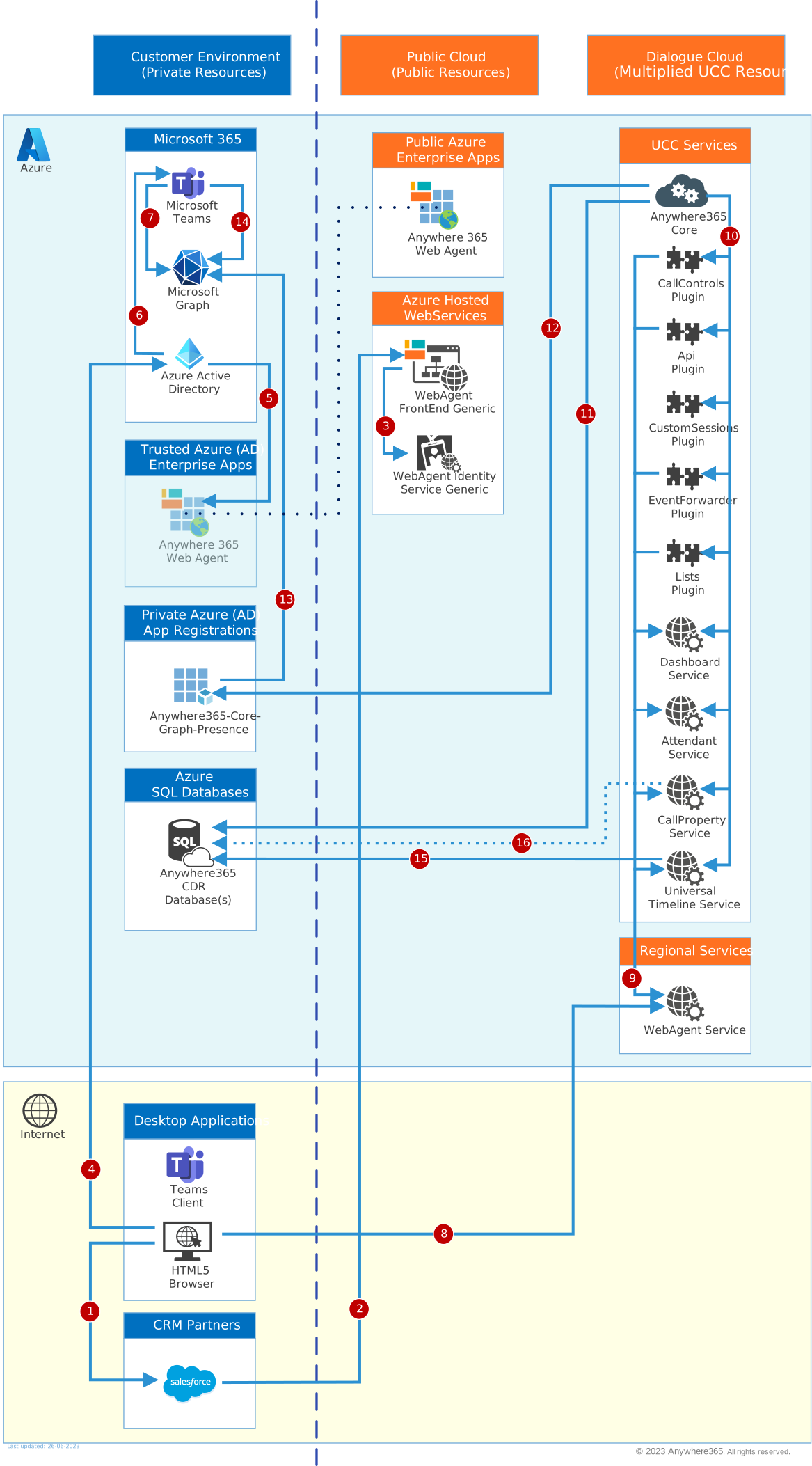
View 3: WebAgent with CRM Service
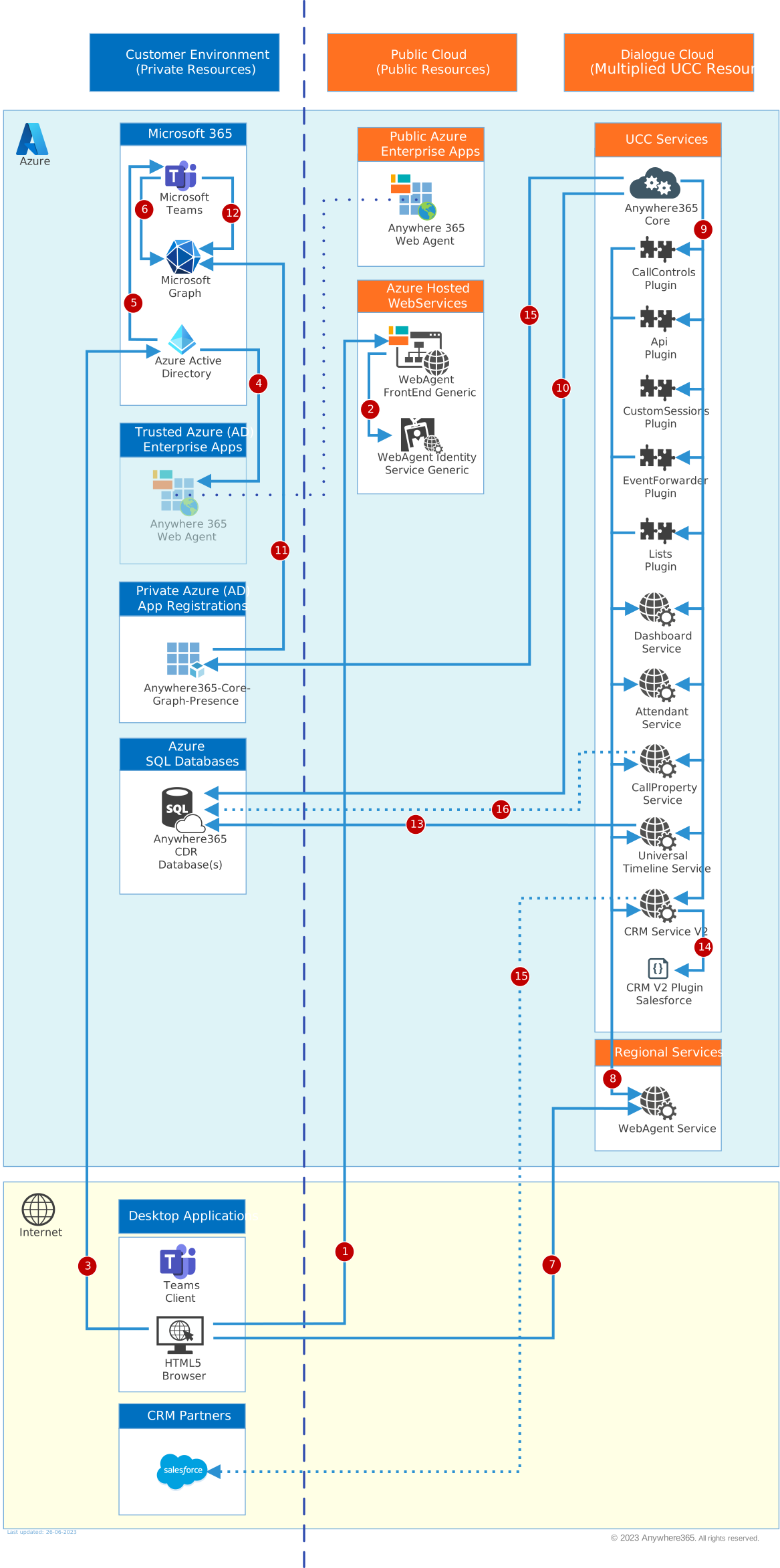
View 4: WebAgent with Dialogue Manager
(to be added)
View 5: WebAgent with Dialogue Studio
(to be added)